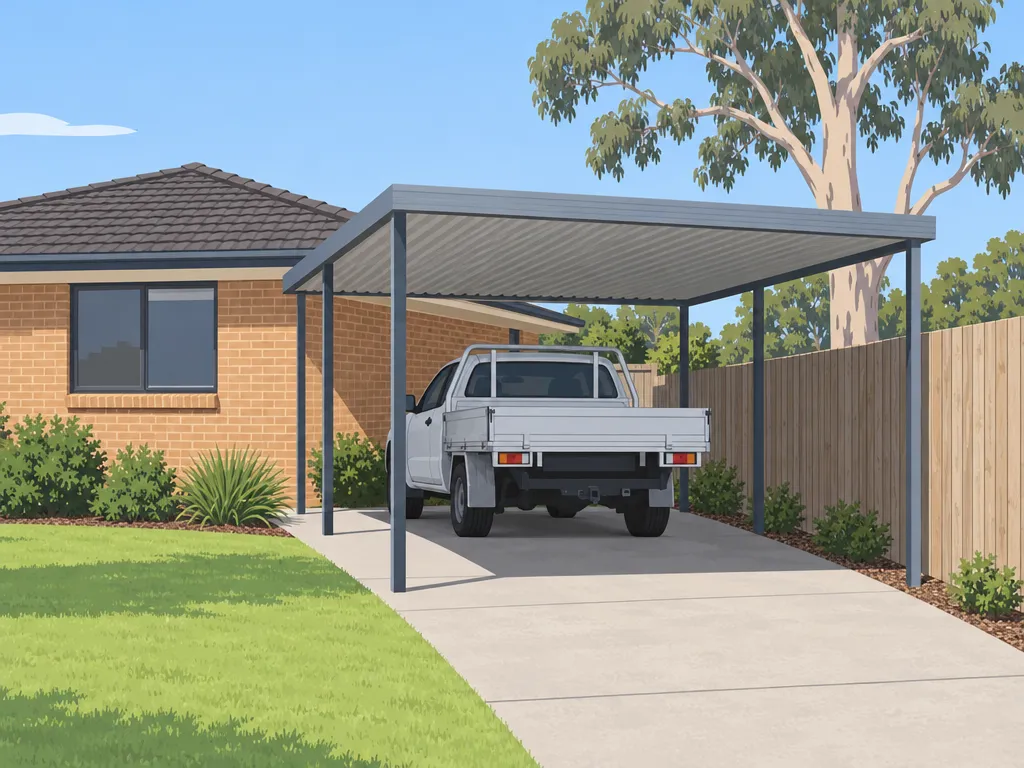
NSW switches to NCC 2025 on 1 May 2027. Until then, the code for building work here is NCC 2022 Amendment 2, in effect since 29 July 2025. From October 2026, that leaves about six months (our count, October to May).
The more useful news for anyone planning a garage is how little changes. Two entries on the ABCB's list of Housing Provisions amendments bear on garages or carports. One is clause 2.2.4(q), the garage-door text, which now takes in wind region B2. The other is a new allowance for open carports. Meanwhile, housing energy efficiency requirements remain effectively unchanged between the two editions, and those requirements also cover certain garages, sheds and carports.
So a new garage, carport or door is not a project to hold back for May 2027. The question worth asking now is which edition your certifier will check your plans against.
When does NCC 2025 start in NSW?
NSW adopts NCC 2025 on 1 May 2027. Building Commission NSW shows the same date on its industry-changes page.
NCC 2025 is already published, but it is not yet the code in NSW: the ABCB released it on 1 May 2026, and NSW's adoption date is 1 May 2027.
Other states have moved at different speeds. The ACT, Victoria and WA adopted it on 1 May 2026. Queensland and Tasmania join NSW on 1 May 2027, and the Northern Territory has not adopted it. An article written for a Melbourne or Canberra reader about "the new code" can describe rules already in force there that are not yet in force here.
Release to NSW start is twelve months. NSW says the 12-month transition gives industry more time and means less disruption to projects due to start early in 2027. Expect this to come round again: the NCC is amended every three years by the Australian Building Codes Board.
Which code applies to my new garage, carport or door?
Your certifier or council checks the plans, not your builder and not your garage door supplier. Before issuing a Complying Development Certificate or a Construction Certificate, the council or registered certifier must be satisfied the plans comply with the relevant edition of the BCA.
At the last change, the edition depended on when you lodged. Complying Development Certificate applications lodged on or after 29 July 2025 are assessed against NCC 2022 Amendment 2, and the same applies to most Construction Certificate applications. That is how the last switch worked. It is not a promise about 2027. If your lodgement falls near 1 May 2027, ask your certifier how they will treat it.
The national text is also not the whole story. In NSW you must also consider NSW-specific variations and requirements, and NSW plans its own variations to NCC 2025. The ABCB itself cautions that some requirements may apply at different times, or not at all, because of state variations.
Our advice at Brisbane Water Garage Doors is to put that question to your certifier at the start, before a door is chosen or an opening is framed. One email early saves a redraw later.
Does NCC 2025 change garage rules?
- 1Clause 2.2.4: garage doors in openings not more than 3 m high, in wind regions B2, C or D, named as complying with AS/NZS 4505
- 2Housing energy efficiency: effectively unchanged from NCC 2022
- 3Condensation, Part 10.8: revised
- 4New open-carport allowance, 9.2.9(3)
- A900 mm to a side or rear boundary, not a road boundaryIn the code text: check with your certifier, not shown as a change
- B1.8 m to another buildingIn the code text: check with your certifier, not shown as a change
Very little. The ABCB says the most substantial NCC 2025 changes apply to commercial buildings. The residential items it names are condensation management and a refinement of structural-reliability Performance Solutions. The NSW Government describes the housing side as a small subset of essential quality and safety improvements for residential building.
Here is where the new edition does reach a house and its garage:
- Energy efficiency. Housing requirements remain effectively unchanged, including for certain Class 10 buildings such as garages, sheds and carports.
- Condensation. Part 10.8 now covers climate zones 1 and 3 for the first time, makes wall cavities mandatory in climate zones 6, 7 and 8, and revises roof ventilation based on whether insulation runs parallel to the roof plane. Whether any of this touches your garage depends on the building and its climate zone. Your designer or certifier can answer that for your site.
- Wind and structure. Wind regions are revised, wind region B2 is added in clause 2.2.4, and AS 4055 Amdt 1 and AS/NZS 1170.2 Amdts 1 and 2 are newly referenced.
- Carports. There is a new open-carport allowance in the 9.2.9(3) encroachment provision.
Nothing on that list adds a new rule for openers or door safety mechanisms. Door selection still matters, and a new door or opener is still worth choosing carefully, but the code change is not the reason.
What does NCC 2025 say about garage doors and wind?
One clause names garage doors directly. Housing Provisions 2.2.4 names garage doors, and other large access doors in openings not more than 3 m high, in wind region B2, C or D, as complying with AS/NZS 4505. The code labels those three regions cyclonic in Table 2.2.3b. The NCC 2025 change is that B2 now sits in that clause.
A site's wind region comes from the site, not the suburb name, so get it from your certifier or engineer rather than from a map you found online. The same page also sets how much structural margin a garage needs: a Class 10a building associated with a house sits at Importance Level 2, and an isolated minor Class 10a building at Level 1.
If storm season is what's on your mind, our guide to what a damaging wind warning means for your garage door covers the warnings and the checks before and after a blow.
How close can a garage or carport sit to a boundary?
The fire separation part of the Housing Provisions deals with a Class 10a garage or carport near a boundary or another building. The distances it uses are 900 mm from an allotment boundary (other than one adjoining a road or public space) and 1.8 m from another building. Closer than that, the external wall has to meet 9.2.3: an FRL of 60/60/60, or masonry at least 90 mm thick.
Open carports can be exempt if they pass the 9.2.8 openness tests: two or more sides open, and at least one third of the perimeter open, where a side counts as open only if the roof is at least 500 mm from another building or the boundary.
Treat these figures as the code text to check with your certifier, not as something new. The carport entry that does appear among the amendments is the open-carport allowance in 9.2.9(3).
Should you wait for May 2027 to build?
- NCC 2022 Amendment 2NSW code since 29 July 2025NSW Government
- NCC 2025NSW adopts 1 May 2027NSW Government
- Housing energy efficiency, incl. certain garages, sheds, carportseffectively unchangedAustralian Building Codes Board
- Garage doors, openings ≤3 m high, wind regions B2, C, DAS/NZS 4505Australian Building Codes Board
- Garage or carport900 mm to boundary, not a road boundary / 1.8 m to another building (check with certifier)Australian Building Codes Board
For a garage, carport or replacement door, waiting buys you very little. Before you lodge or order, run through these:
- Ask your certifier or council which NCC edition your plans will be checked against, and how they will treat lodgement close to 1 May 2027.
- Ask whether any NSW variations bear on your project.
- If the project includes a new door opening, ask what wind region your certifier is working from.
- If a garage or carport will sit near a boundary or another building, ask about the fire separation distances before the slab goes in.
- If your start is planned for early 2027, raise timing now. NSW set the transition partly to reduce disruption to projects due to start early in 2027.
Planning a new garage door? Your next step
Whatever the code edition, the door still has to suit your opening, your site and the way you use the garage. If a new garage, carport or replacement door is on your list for 2026 or 2027, tell Brisbane Water Garage Doors what you're planning through the quote request page. Have your certifier's answer on the code edition and wind region to hand when you do.