Bushfire season and this summer's El Niño peak now overlap. The statutory Bush Fire Danger Period runs 1 October to 31 March, and it may vary with local conditions. BOM says El Niño is likely to peak around November to December as a very strong event. It also gives over a 70% chance of unusually high maximums across eastern NSW from November to January. Put those side by side and the hottest part of the outlook sits inside the danger period. From late October, about five months of the period are still to run (our estimate, counting November to March).
That makes now the time to look at the garage door, usually the biggest opening in a house. The risk is embers finding gaps, more than flames. The check is plain. Look at the seals along the bottom, sides and top, measured against the Australian Government's YourHome guidance of gaps of no more than 2mm for all external openings.
Is my garage door bushfire safe?
No door, seal or product can promise that, and we won't. What you can control is the gaps.
- 1Bottom seal
- 2Side edges
- 3Top edge
- 4Threshold: embers can 'flow' along the ground to entry points under doors (YourHome)
- 5Strong winds push embers through narrow gaps, under doors (YourHome)
- 6Welcome mats and outdoor furniture can ignite (YourHome)
YourHome says strong winds can push embers "through narrow gaps, under doors", and that embers can "flow" along the ground to entry points under doors. A garage door has long edges on three sides and a threshold where leaves and debris pile up. That makes it a natural place for embers to collect and get in.
The NSW RFS home checklist says to fit seals around doors and windows to eliminate gaps and to repair or cover gaps in external walls. On most homes, the garage door is the longest run of seal you have.
Preparing your home is not only for people who plan to stay. The RFS says that even if you leave early, the more you prepare your home, the more likely it will survive a bush fire or ember attack, and a prepared home is less likely to put your neighbours' homes at risk.
A well-sealed garage is not a place to shelter, and it does not change when you should leave. That decision belongs in your bush fire survival plan with the NSW RFS.
When is bushfire season, and why check the garage now?
The danger period is already under way. The official bushfire danger period for most of NSW begins 1 October. The RFS lists Central Coast as a council area where a fire permit is required, so bag or compost the leaf litter you sweep up rather than assuming you can burn it.
The NSW Government's August warning was blunt: "With El Nino conditions established, there is a high potential for a challenging summer." The RFS Commissioner pointed to several years of above-average rainfall and vegetation growth. That means more fuel. Globally, BOM reports sea surface temperatures at record levels, with September 2026 the warmest September on record, 1.02 °C above the 1961 to 1990 average.
The national fire agencies' spring outlook flags heightened fire risk across northern and southeastern NSW. It also says bushfires can still occur in regions with a normal seasonal outlook.
Now the honest part. BOM says a strong El Niño signal does not necessarily mean strong impacts on Australia's rainfall and temperature. Its November to January rainfall outlook is likely above average for "southern Queensland and north-eastern New South Wales". So this is not a forecast of a dry summer for Gosford. The reason to check your door is that the season is on. The wetter side of the outlook brings its own risks, covered in our guide to what a damaging wind warning means for your garage door.
How embers get into a garage
“Around 80% of houses lost can be attributed to ember attack, either alone, or in combination with other bushfire attack mechanisms.”
The bigger threat to a house is usually embers rather than the flame front. YourHome says ember attack is the most common cause of building damage or destruction from bushfires, and embers travel well ahead of the fire.
Once inside, embers enter through gaps and ignite the interior. A garage rarely sits empty. Cardboard boxes, timber offcuts, paint tins and a car all sit within reach of the floor line.
The garage does not stand alone, either. YourHome notes that garage-to-house flame contact is possible when a neighbouring building ignites. A garage beside or under the house is part of the house's risk.
How to check your garage door for gaps
Our view at Brisbane Water Garage Doors: do this on a bright day, from the inside, with the door shut and the garage light off. It takes about five minutes.
Garage door gap check, door shut, light off, bright day
Torn seal, a door that won't close fully, or gaps you can't close yourself: get a garage-door trade to look.
Start at the bottom. Crouch and look along the floor line. Any daylight means there is a gap worth a closer look, because YourHome's benchmark is gaps of no more than 2mm for all external openings. Then run your eye up each side and across the top, where brush or rubber strips meet the frame.
Feel the bottom seal too. Rubber that has gone hard, flat or split no longer presses against the slab, even if it looks whole from a distance.
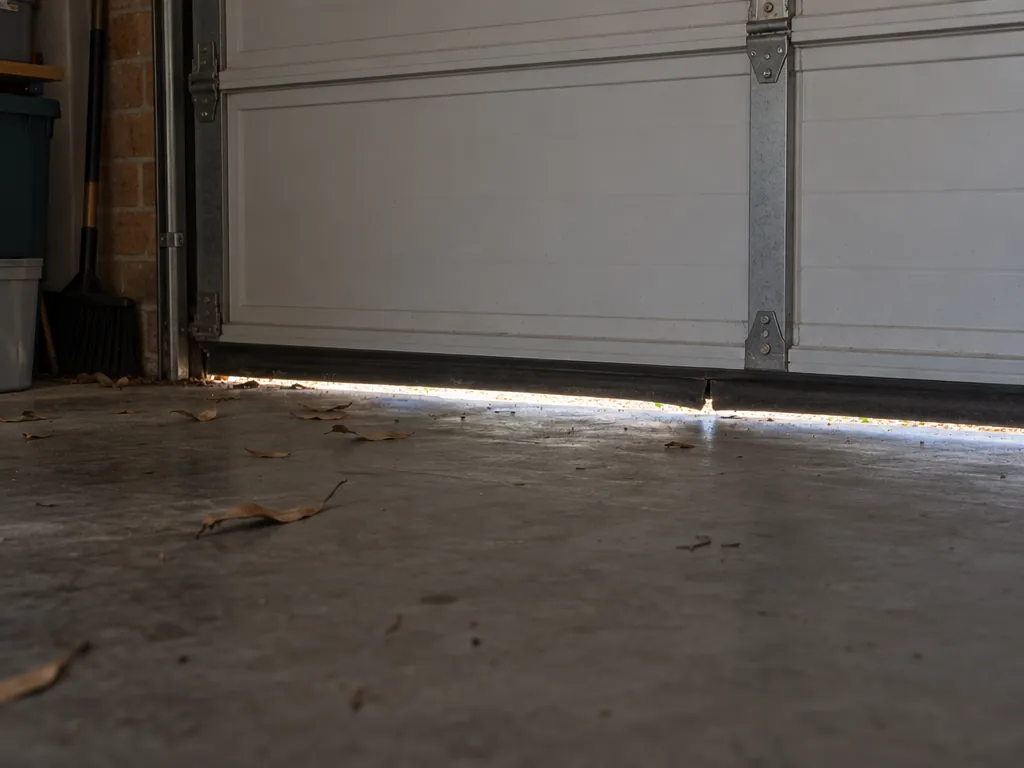
Some fixes are a homeowner's job, such as sweeping out the leaves that stop a seal sitting flat. Get a garage-door trade to look if:
- the bottom seal is torn, missing sections or has hardened
- the door won't close fully, or leaves a wedge of light at one end
- you can see gaps at the sides or top that a strip won't close
- the door is heavy, noisy or uneven to lift, which points to springs or cables
Leave tensioned springs and cables alone. They hold a lot of stored energy, and adjusting them is trade work.
Keep the threshold clear, and the door shut
Seals are half the job. The other half is what sits just outside the door. YourHome says embers can ignite outdoor items such as welcome mats and outdoor furniture, and a nearby window can then break.
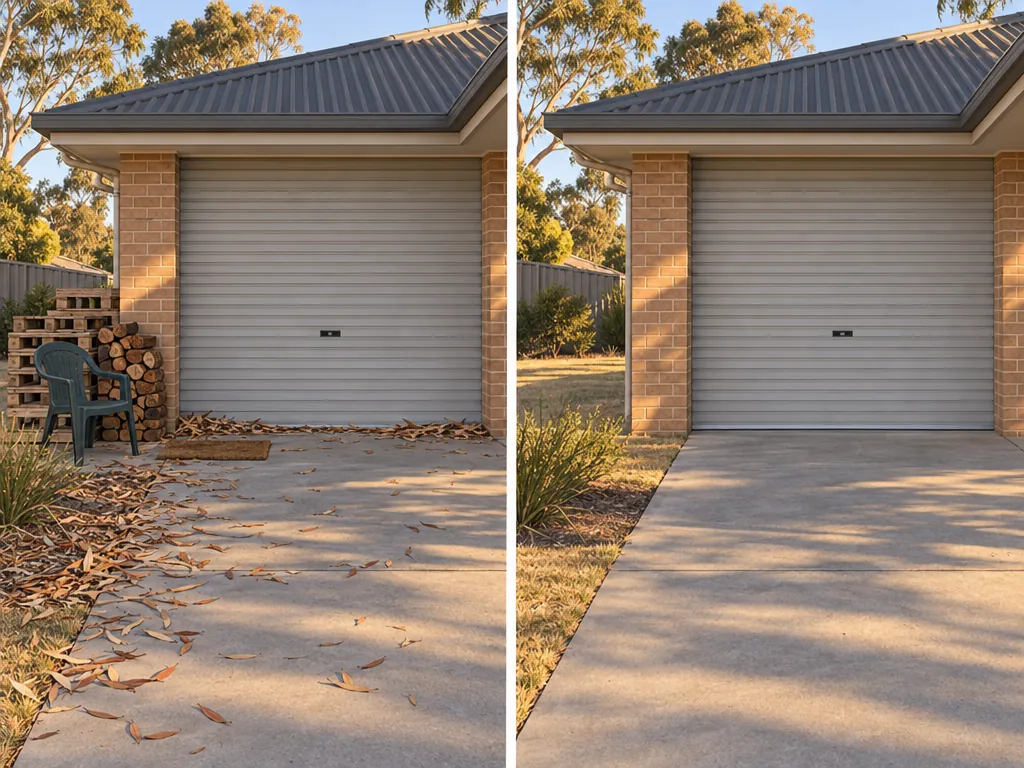
So move the doormat inside for summer. Stack firewood, pallets and cardboard away from the door rather than against the wall beside it. Sweep leaf litter off the threshold and the driveway edge, especially after a windy day.
One more thing: a sealed door only does its job when it is shut. A garage left open for airflow, or half-open for the dog, has no edge for a seal to close against. For the rest of the house, work through the RFS Prepare your home checklist.
Is my home on bush fire prone land?
Central Coast Bush Fire Management Committee area
Last major fire: 2019/20, 30,974 ha burnt
On the Central Coast, the RFS puts the area at about 70.2% bushland. The last major fire was 2019/20, with 30,974 ha burnt. The RFS adds that even "if your home is in the lowest risk category it can still be damaged in a bush fire".
You can check whether land is bush fire prone with the RFS tool or the NSW Planning Portal. That matters most if you are planning building work. Building on bush fire prone land must meet Planning for Bush Fire Protection 2019, which the RFS is now reviewing.
This season's figures in one place
- Bush Fire Danger Period (statutory):1 October to 31 March, may vary with local conditionsNSW RFS
- Maximum gap for external openings (YourHome guidance):no more than 2 mmYourHome (Australian Government)
- Share of houses lost attributable to ember attack (alone or combined):around 80%YourHome (Australian Government)
- Expected El Niño peak (BOM, issued 22 Oct 2026):around November to December, very strong. A strong signal does not necessarily mean strong impactsBureau of Meteorology
- Chance of unusually high Nov to Jan maximum temperature, eastern NSW:over 70%Bureau of Meteorology
- Central Coast bushland share of BFMC area:about 70.2%NSW RFS Central Coast
Six checked figures sum up this season. The danger period is long, the El Niño peak sits inside it, embers do most of the damage, and the gap benchmark is small.
What to ask a garage-door trade before summer
If you get someone to look at the door, three questions cover most of it:
- Are the bottom, side and top seals intact, and do they close against the slab and frame without visible gaps?
- Does the door close fully and sit flat, with no wedge of light at either end?
- Does the opener's manual release work, so you can open the door by hand if the power goes off?
For the rest of the house, and for when to leave, use the RFS checklist and make a bush fire survival plan.
If you'd like Brisbane Water Garage Doors to go over those three questions on your door, send us the details through our quote page and tell us what you found in your five-minute check.